WHAT IS IT?
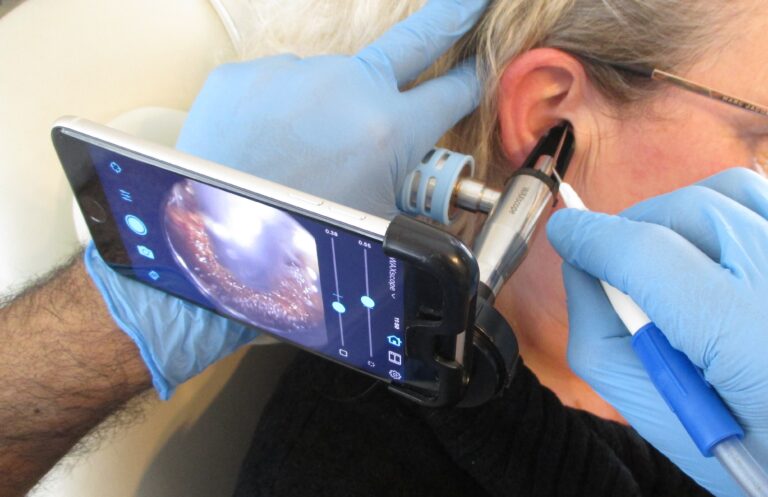
WAXscope® ear wax removal is when ear wax is removed from the ear with the patented Clearwax WAXscope® device. The WAXscope® is used to directly visualise the ear wax whilst it is being removed using either ENT micro-instruments (e.g. ear hook, jobson horne) or gentle suction with a low pressure suction machine and fine probe.
HOW IS IT PERFORMED?
The procedure is performed by Audiologists, Hearing Aid Dispensers and ENT doctors using the WAXscope® (video-otoscope). The WAXscope® is a specialist ear camera used to examine the inside of the ear and is attached to a video monitor for easy viewing, although direct viewing is also possible through the eyepiece of the WAXscope®. At CLEARWAX we have specially designed, developed and patented the WAXscope® for ear wax removal. The WAXscope® is a light-weight, portable and easy to operate video otoscope which when placed into the ear canal provides a high-definition (HD) and an extremely magnified view of the ear canal and ear drum to facilitate effective ear wax removal.
Ear wax removal using the WAXscope® typically takes between 10 to 25 minutes to perform. This can vary depending on the amount and type of of ear wax, how deep the ear wax is inside the ear canal, if ENT instruments or microsuction is being used and whether you are having one or both ears treated. It is usually performed with you comfortably sat on a chair with your head titled to the side slightly so that the ear with ear wax can be easily accessed.
To watch how ear wax removal is performed using the WAXscope® please click here.
THE BENEFITS
Unlike ear syringing or ear irrigation, where ear wax is flushed out ‘blindly’, with ear wax removal using the WAXscope® the ear wax is being directly viewed whilst it is being removed. This makes the procedure much quicker, safer and comfortable for the patient. Other benefits of ear wax removal using the WAXscope® include:
- A highly magnified view of the ear canal and eardrum similar to a microscope.
- There is not always the need to apply ear drops for wax (e.g. olive oil or sodium bicarbonate ear drops) for several days or weeks beforehand, which is the case with ear syringing or ear irrigation. Nonetheless, the use of ear drops is still recommended where ever possible for one or two days prior to having WAXscope® ear wax removal performed.
- No water is being flushed into the ear canal like for ear syringing or ear irrigation. Instead the procedure is performed ‘dry’ significantly reducing the risk of infection and accidentally ‘pumping’ ear wax deeper into the ear canal.
- Unlike ear syringing and ear irrigation, it can be performed in people who have a perforated eardrum or grommet, mastoid cavity and cleft palate, in addition to any foreign object (e.g. children’s marble) that may be lodged inside the ear canal.
LIMITATIONS AND SIDE EFFECTS
WAXscope® ear wax removal is regarded as being safe and well tolerated. Some of the risks and side effects of ear wax removal with the WAXscope® include:
- Damage and trauma to the ear canal and eardrum (including perforation).
- If microsuction ear wax removal is being performed a loud noise can be generated in the ear canal due to the suction. In some people this can cause hearing loss (temporary or permanent) and tinnitus (ringing type noise inside the ear) or worsening of it if already experienced. This is rare.
- Microsuction ear wax removal ‘cools’ the temperature inside the ear canal which can lead to faintness, dizziness or vertigo. This is due to the ‘caloric’ effect and is normally short lasting.